
%20(1)%20(1).png)
Most B2B teams are not struggling because they have a bad product.
They are struggling because the right buyers do not know them, trust them, or see enough reason to start a sales conversation.
That is the real demand generation challenge in 2026. It is not just about getting more traffic, collecting more leads, or running more ads. It is about creating enough trust, urgency, and relevance that qualified buyers actually move through the funnel.
At SalesCaptain, we have seen this firsthand while building outbound and demand generation campaigns across SaaS, recruitment, cybersecurity, healthcare, programmatic media, and other B2B markets.
The companies that win are usually not the ones that send the most messages. They are the ones that match the right campaign, offer, and timing to where the buyer actually is.
That is where demand generation agencies come in. The good ones do not just push ads, write generic content, or spam cold lists. They build systems that create demand, capture existing intent, nurture buyers, and turn interest into pipeline.
This guide compares the best demand generation agencies and companies in 2026 based on their B2B focus, service model, channel strengths, proof of results, case studies, and fit for different types of companies.
If you are trying to choose the right agency, start here.
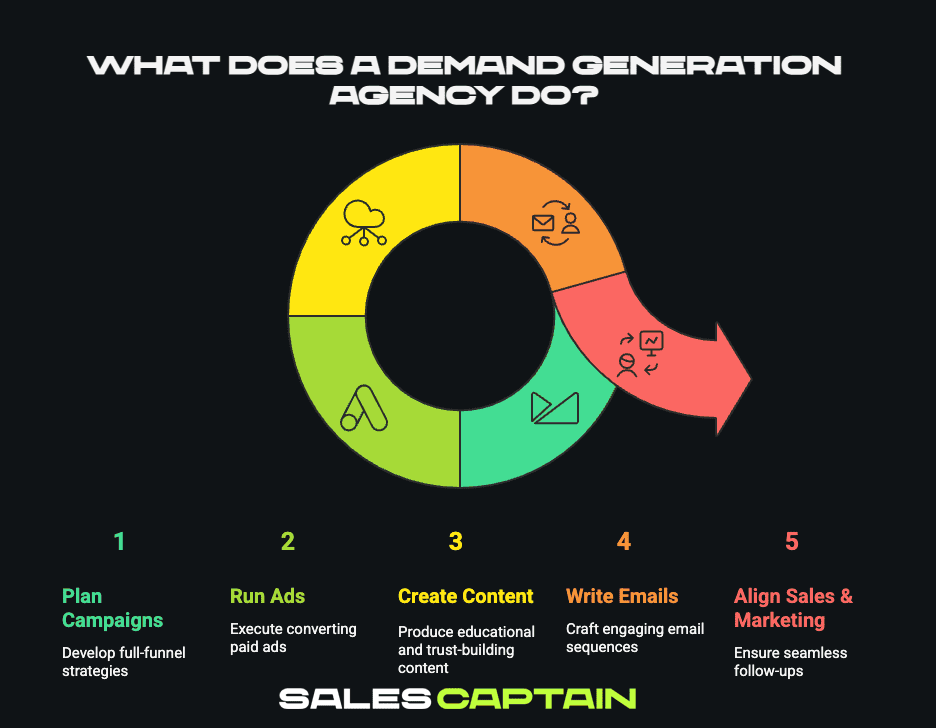
A demand generation agency isn’t here to just hand you a list of leads. They build the system that turns strangers into sales conversations.
Here’s what that usually includes:
They’re not trying to hit vanity metrics. They’re building pipeline that actually moves.
This mix-up happens all the time.
Lead generation is about capturing contact information. It is usually short-term and transactional: run an ad, collect a form fill, pass the lead to sales, and hope the person is ready.
Demand generation is bigger. It is about creating awareness, trust, urgency, and buying intent before someone is ready to talk to sales.
In practice, we have seen this difference show up most clearly in lead quality. A lead generation campaign can get you names in a CRM, but that does not mean those people understand the problem, trust your offer, or want a sales conversation. Demand generation warms up the market before the conversion point.
That usually means more education, more retargeting, more useful content, better audience segmentation, stronger messaging, and more touchpoints across the buying journey.
Lead gen gets names. Demand gen builds momentum.
The right demand generation services should give you more than campaign execution. They should help with targeting, messaging, channel strategy, follow-up, reporting, and pipeline quality.
In our experience, companies usually hire an agency for one of five reasons:
Building demand generation in-house takes time. You need strategy, copy, creative, paid media, email, CRM setup, reporting, and sales alignment.
A good agency already has the team, tools, and campaign process in place. That means you can launch faster, test faster, and avoid months of trial and error.
Many B2B teams are running scattered tactics: some ads, a few blog posts, occasional LinkedIn activity, and random email campaigns.
A demand generation agency should turn that into a system. The goal is not just more activity. The goal is to connect audience targeting, messaging, channels, offers, follow-up, and reporting into one motion.
Most marketing teams are already handling content, brand, website updates, events, sales support, reporting, and internal requests.
Demand generation needs dedicated focus. If no one owns it properly, campaigns become inconsistent and results become hard to measure.
More leads do not always mean more revenue. We have seen companies generate plenty of form fills, email replies, or booked calls that never turn into serious opportunities.
The right agency should help improve lead quality by targeting better accounts, using stronger qualification criteria, and matching the campaign to the buyer’s stage.
If you cannot tell which campaigns create pipeline, you cannot know what to scale.
A strong demand generation agency should help you track more than clicks, impressions, opens, or raw lead volume. You want visibility into qualified conversations, SQLs, opportunities, CAC, sales cycle length, and revenue influenced.
Do not hire a demand generation agency if you have no clear offer, no defined ICP, no sales process, or no one available to follow up with qualified leads.
If you already have a team but lack direction, a demand generation consultant or short-term demand generation consulting engagement may be enough. If you need strategy and execution together, an agency is usually the better fit.
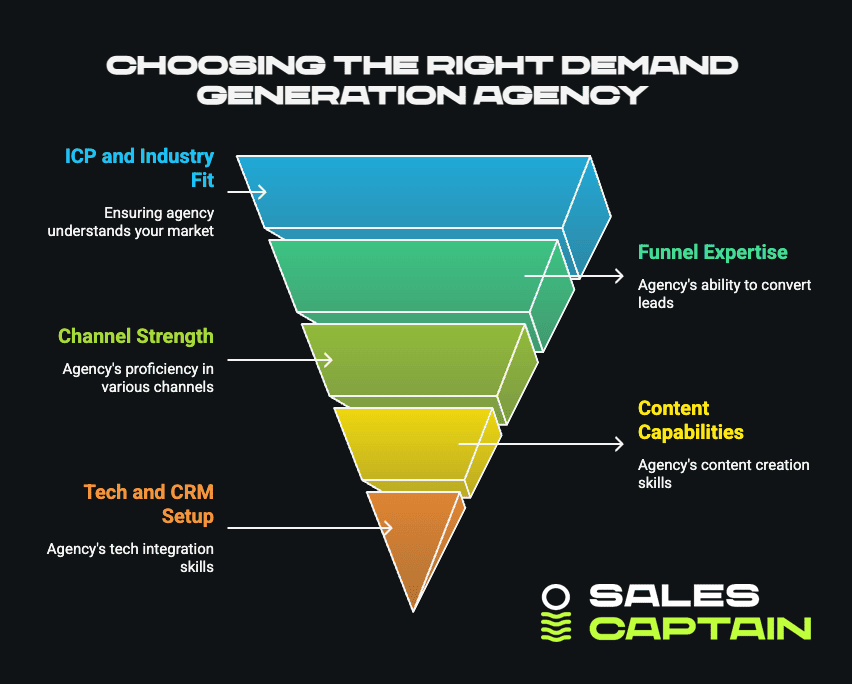
The best demand generation agency is not always the biggest one or the one with the most services. It is the one that matches your market, sales cycle, budget, internal team, and growth motion.
From our experience, most bad agency partnerships happen because the company chooses based on surface-level claims instead of asking how the agency will actually create pipeline.
Before comparing agencies, get clear on what you actually need.
Are you trying to create demand in a new market? Capture buyers already showing intent? Improve lead quality? Support sales with better follow-up? Build a full outbound engine? Fix paid acquisition?
Different agencies are built for different problems. A paid media agency, an inbound agency, an outbound agency, and a full-funnel demand generation agency may all use the same language, but they usually solve very different problems.
Not every agency will understand your audience. If you are choosing a SaaS demand generation agency, pay extra attention to sales cycle length, ACV, product maturity, trial or demo flow, and whether the agency understands how SaaS buyers compare vendors.
You want a partner who understands your buyer, sales cycle, objections, deal size, and buying committee. If you have to explain every detail from scratch, the campaign will move more slowly, and the messaging will probably be weaker.
This matters even more for enterprise software companies, B2B manufacturers, and international teams entering new markets, where buying committees, regional context, and sales cycles are usually more complex.
Do not judge an agency only by traffic, impressions, open rates, clicks, or raw lead volume.
The better metrics are:
A good demand generation agency should be comfortable talking about pipeline quality, not just activity.
Ask for case studies, client examples, campaign screenshots, testimonials, or performance breakdowns.
The proof does not have to be identical to your company, but it should show that the agency can solve a similar problem. If they claim to generate pipeline but only show traffic charts or vague testimonials, that is a red flag.
Some agencies are strongest in paid media. Others are better at SEO, content, outbound, email, ABM, or lifecycle marketing.
The issue is not whether they do everything. The issue is whether their strongest channels match your growth problem. If you need outbound pipeline, a content-first agency may not be enough. If you need long-term inbound demand, a cold outreach agency alone may not be enough.
Demand generation should improve over time. The agency should not just launch campaigns and send monthly reports.
Ask how they use campaign data, sales feedback, CRM data, call recordings, buyer objections, and conversion rates to improve messaging and targeting.
In our experience, this feedback loop is where many campaigns either get stronger or slowly die.
Be careful if an agency:
Before we get into the list, here’s how we evaluated these agencies: we looked at their core services, B2B focus, demand generation approach, proof of results, public case studies, client fit, and whether they focus on pipeline instead of vanity metrics like clicks, impressions, or raw lead volume.
Best for: B2B founders, agencies, SaaS companies, and revenue teams that want a fully managed outbound system built around pipeline quality, not list volume.
SalesCaptain is a full-funnel outbound agency built to generate the same pipeline as traditional outbound using 3x fewer contacts.
Instead of forcing one generic campaign across the whole market, SalesCaptain builds outbound around buying stage. The team uses its Full-Funnel Outbound System to run three outbound motions at the same time, each matched to a different stage of the buying funnel:
This lets SalesCaptain match the campaign, message, timing, and offer to where each buyer actually is, instead of treating the entire market like one cold list.
SalesCaptain handles the full outbound process, including strategy, lead sourcing, enrichment, copywriting, inbox setup, campaign execution, response handling, meeting booking, and live performance tracking. You get the performance of an in-house outbound team without the cost, hiring, or operational complexity of building one yourself.
This model matters because one-size-fits-all outbound usually wastes good accounts. A cold prospect, an account showing buying intent, and a warm lead who already engaged with your brand should not receive the same message, CTA, or offer.
Most outbound agencies send one campaign to one list and hope the timing works. SalesCaptain runs multiple outbound motions across the same market, each matched to a different buying stage. This helps reach cold accounts, active buyers, and warm prospects with the right message at the right time.
SalesCaptain comes from a marketing background, so outbound is treated like a campaign engine, not a static sales sequence. The team tests fast, reads the data, scales what works, and cuts what does not.
SalesCaptain is a Clay Enterprise Partner, Salesforge expert, and Lemlist expert. That gives the team strong experience across the core systems needed for modern outbound, including data enrichment, lead sourcing, email infrastructure, sequencing, and personalization at scale.
SalesCaptain combines human strategy with AI-supported execution. AI supports research, personalization, response handling, and workflow speed, while humans still control the strategy, messaging, and campaign direction.
SalesCaptain has a custom AI BDR built in-house. It can automate email responses, support follow-up, and book meetings directly for your AEs, helping reduce manual work while keeping the sales process moving.
SalesCaptain does not treat outreach performance as just open rates and reply rates. The team uses sales call recordings, email replies, buyer objections, and campaign data to improve messaging, sharpen the pitch, and help sales teams handle the objections that show up most often.
Campaigns are adapted by business model and industry. SalesCaptain works across B2B SaaS, B2B products, B2B services, and enterprise sales motions, so the strategy is not copied from one market and forced onto another.
For companies expanding into new markets, SalesCaptain localizes campaign copy based on the region, market, and buyer context. The agency has worked with clients across North America, Europe, Asia, the GCC, Australia, New Zealand, and beyond.
SalesCaptain has been awarded #1 Top Outbound Agency for the last 3 years consecutively and has also won an award from Tekpon.
This adds credibility, but the real difference is the operating model: SalesCaptain does not compete by sending more emails. It competes by knowing who to contact, when to contact them, and what outbound motion they belong in.
SalesCaptain has proven this system across different industries, markets, and sales motions.
SalesCaptain helped Curated Media build a repeatable outbound engine for programmatic media. After refining the ICP, improving messaging, adding LinkedIn outreach, and running weekly optimization loops, the campaign generated 391 positive replies, 156 booked appointments, 12 closed clients, and $60K in new ARR.
Read the Curated Media case study
For a global recruitment service, SalesCaptain built a scalable outbound engine, sharpened the ICP, improved messaging, and reactivated cold leads through structured follow-ups. The campaign generated 501 booked appointments in 10 months, 715 positive replies, 57 new clients closed, and $394K in new ARR.
Read the Global Recruitment Service case study
SalesCaptain helped Riskwell, a risk management SaaS company, generate 5 to 10 sales-qualified leads per week through targeted outbound. The campaign produced 32 booked appointments in 4 months and a 35% booked meetings ratio.
These case studies show why SalesCaptain’s model is not just about sending more emails. The agency uses outbound to create pipeline across SaaS, recruitment, programmatic media, risk management, healthcare, cybersecurity, and other B2B markets.
Check out more SalesCaptain case studies
Check out SalesCaptain reviews on Clutch
Potential drawback: SalesCaptain is strongest for B2B companies that want outbound tied to pipeline, meetings, and revenue. It may not be the best fit if you only want broad brand awareness, PR, or content-only demand generation.
Best for: Tech and SaaS companies aiming to grow pipeline through paid and organic channels
What makes them stand out: Directive is all about performance. They focus heavily on revenue-driven campaigns, especially for software and B2B companies. Their strength lies in combining paid media with CRO and analytics to make sure every click has a purpose.
What they offer: Paid search, LinkedIn ads, landing page optimization, full-funnel analytics
Credibility: Well-established agency with strong case studies and in-depth playbooks tailored for SaaS
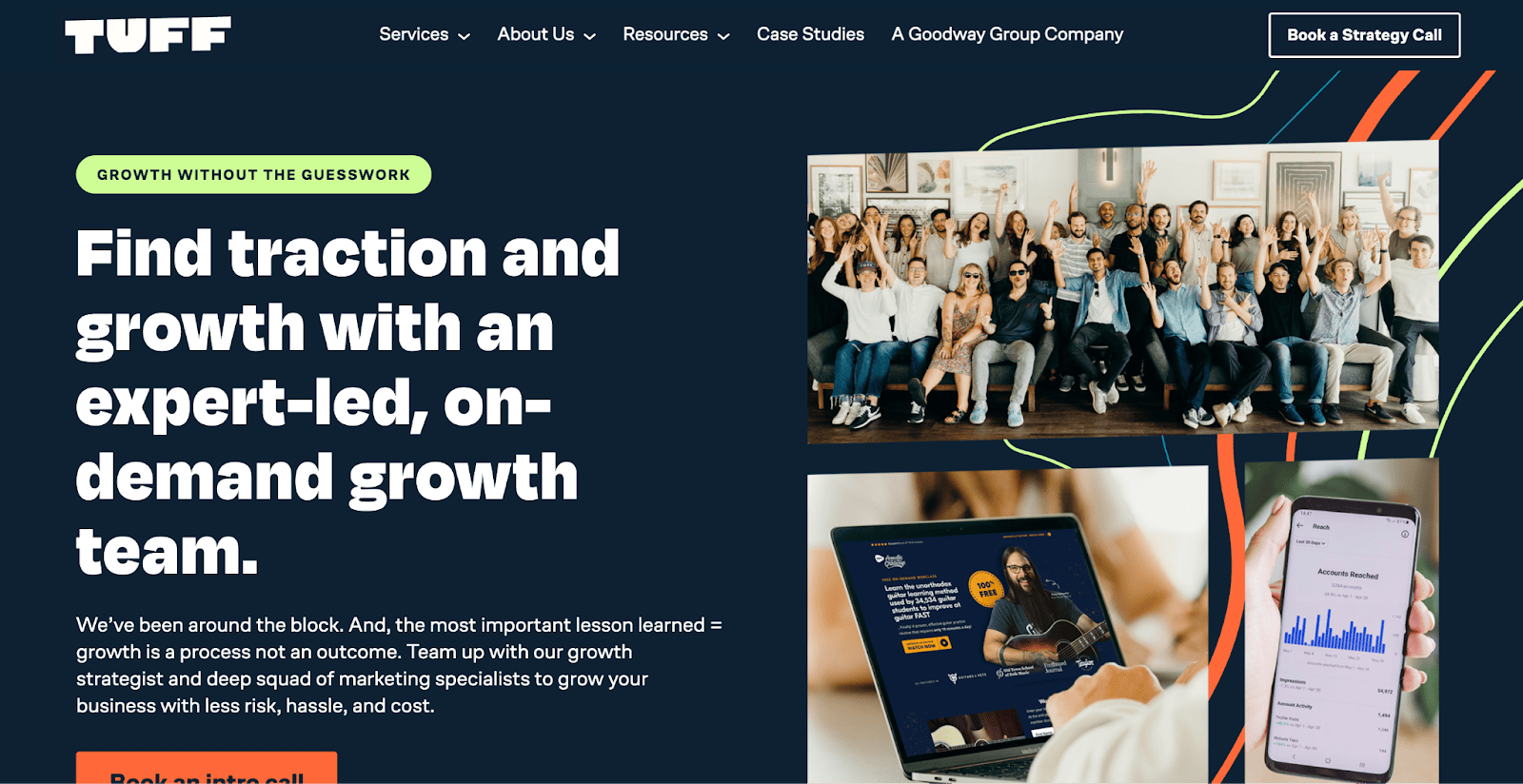
Best for: Startups and small teams looking for agile growth support
What makes them stand out: Tuff works like an embedded growth team. They’re built for fast testing and clear results. You won’t get endless strategy decks. Just action, iteration, and pipeline.
What they offer: Growth strategy, paid acquisition, email marketing, conversion tracking
Credibility: Known for transparent reporting and a hands-on, test-and-learn mindset
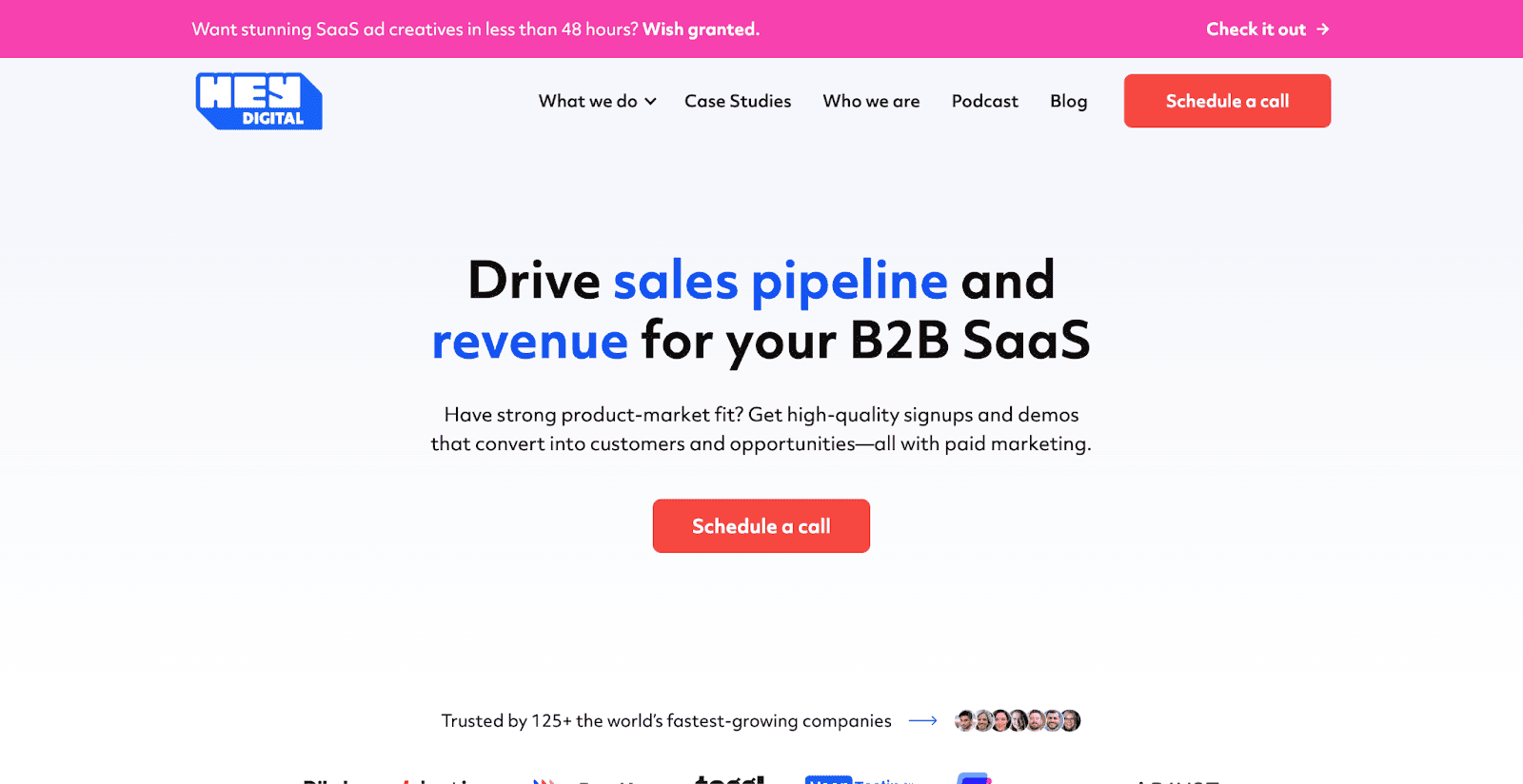
Best for: B2B SaaS companies focused on paid acquisition
What makes them stand out: Hey Digital helps SaaS companies scale paid channels without wasting budget. They combine messaging, landing pages, and creative into a system that brings in leads that sales teams actually want to talk to.
What they offer: Paid search, LinkedIn ads, landing page design, ad creative and messaging
Credibility: Fully focused on SaaS with a lean, specialized team and proven results
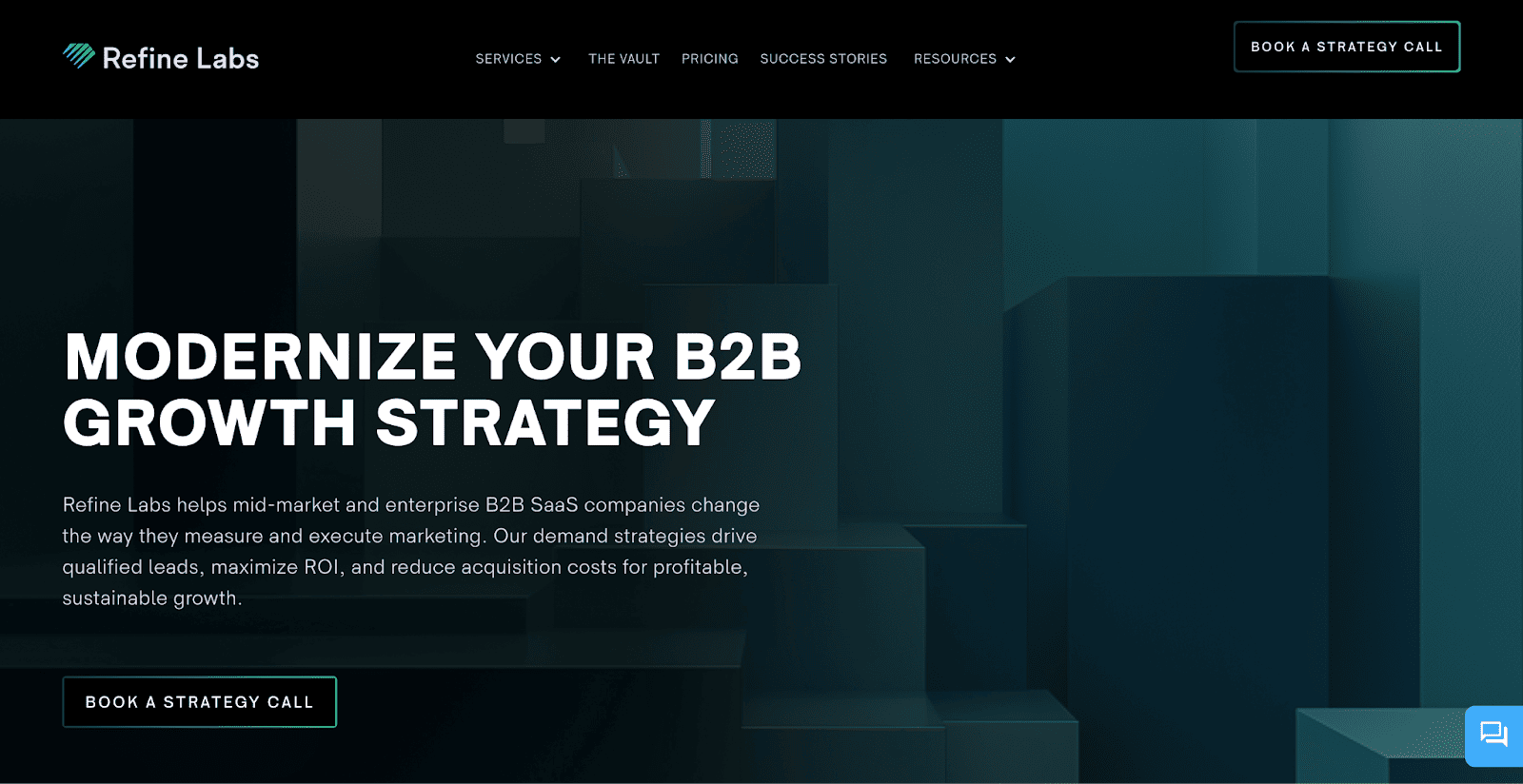
Best for: B2B companies looking to break out of outdated lead-gen tactics
What makes them stand out: Refine Labs is one of the most vocal challengers of the MQL model. They focus on creating demand through modern channels and pushing qualified leads directly into your pipeline, not into a nurture sequence.
What they offer: Paid social, demand strategy, revenue R&D, performance insights
Credibility: Known for shaking up the B2B marketing status quo and influencing hundreds of SaaS teams
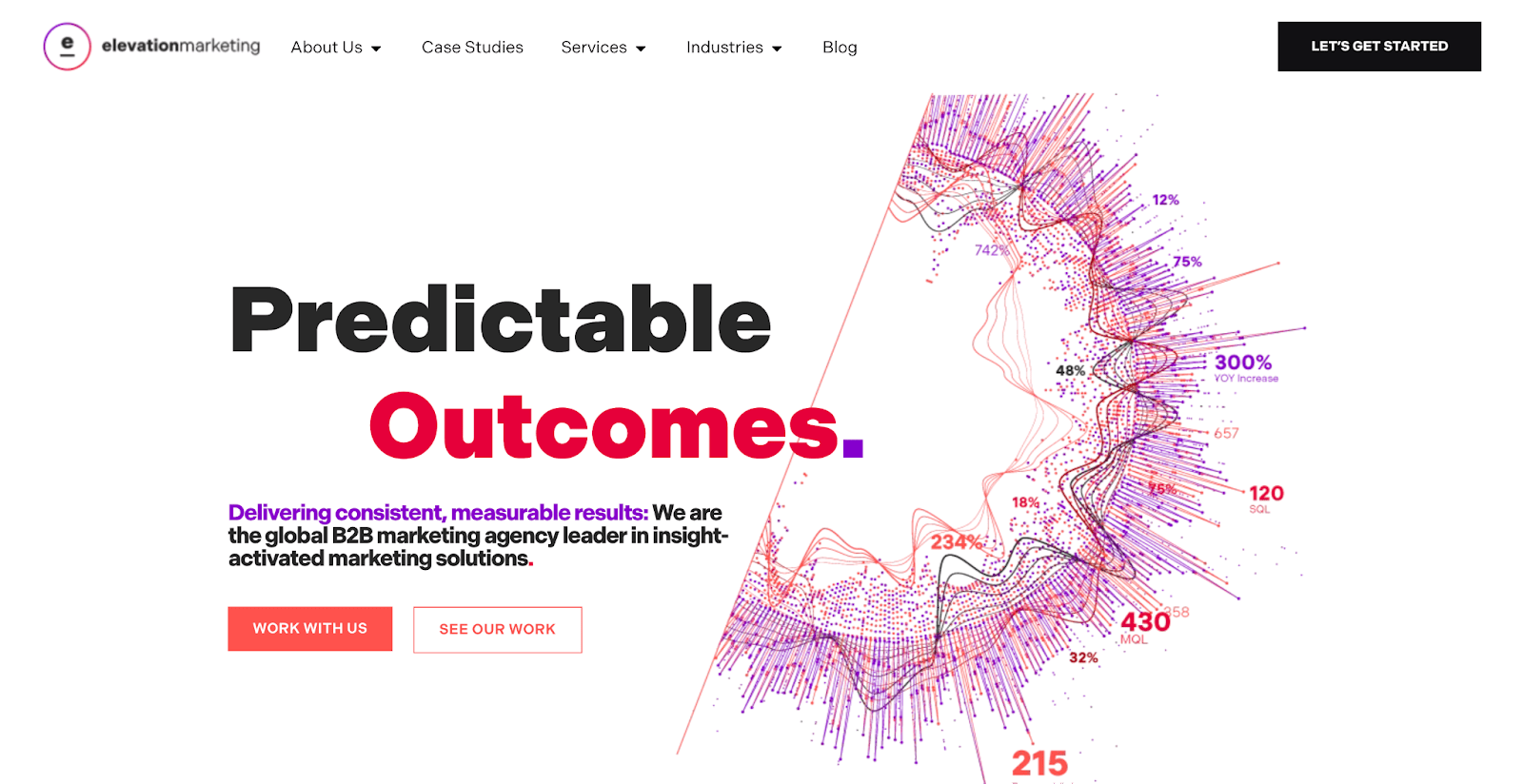
Best for: B2B enterprises looking for integrated demand programs
What makes them stand out: Elevation blends creative, media, and strategy into fully integrated campaigns. Their focus is less on one-off tactics and more on orchestrated demand across multiple channels.
What they offer: ABM, lead generation, paid media, strategic messaging
Credibility: Deep bench of B2B experience across enterprise, manufacturing, and technology sectors

Best for: Professional services and B2B firms that need steady inbound and outbound
What makes them stand out: New North takes a practical approach to demand generation. They focus on building the core systems that keep leads flowing, especially for businesses that don’t have large internal marketing teams.
What they offer: Lead generation, email marketing, CRM setup, digital advertising
Credibility: Works with a mix of small businesses and B2B service providers, with case studies to show results
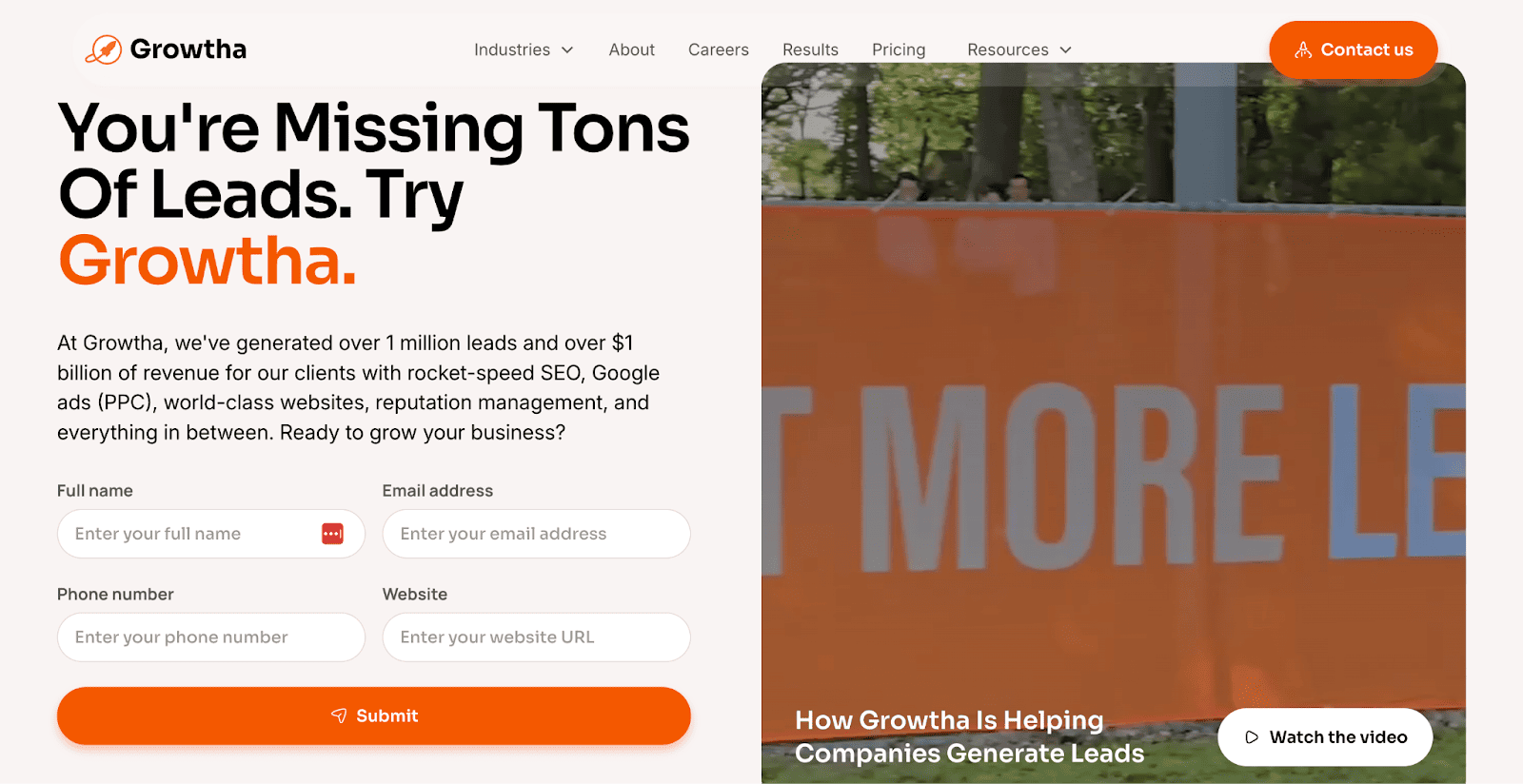
Best for: SaaS and B2B startups that want outbound systems without building in-house
What makes them stand out: Growtha specializes in cold outreach and top-of-funnel growth. Their team handles everything from list building to messaging to scheduling calls, so internal teams can focus on closing deals.
What they offer: Lead sourcing, cold outreach, inbox management, call booking
Credibility: Trusted by early-stage startups that want quick outbound traction without hiring full teams
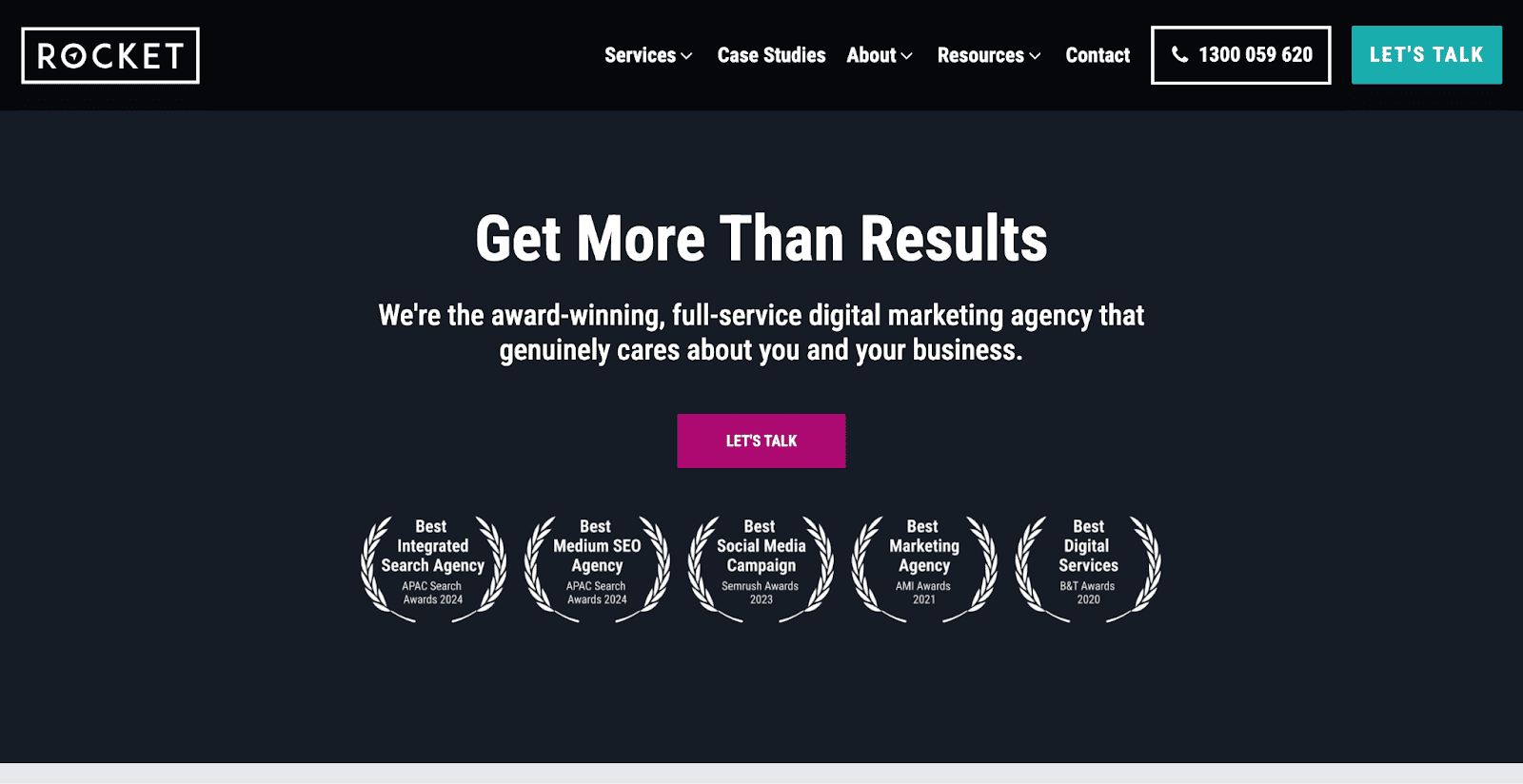
Best for: B2B brands looking for paid media that directly fuels pipeline
What makes them stand out: Rocket is sharp at using paid media to drive real business outcomes. They’re especially good with LinkedIn and search, where most agencies struggle to deliver consistent results.
What they offer: Paid ads strategy, media buying, landing pages, performance audits
Credibility: Australian-based with international reach, known for strong performance accountability
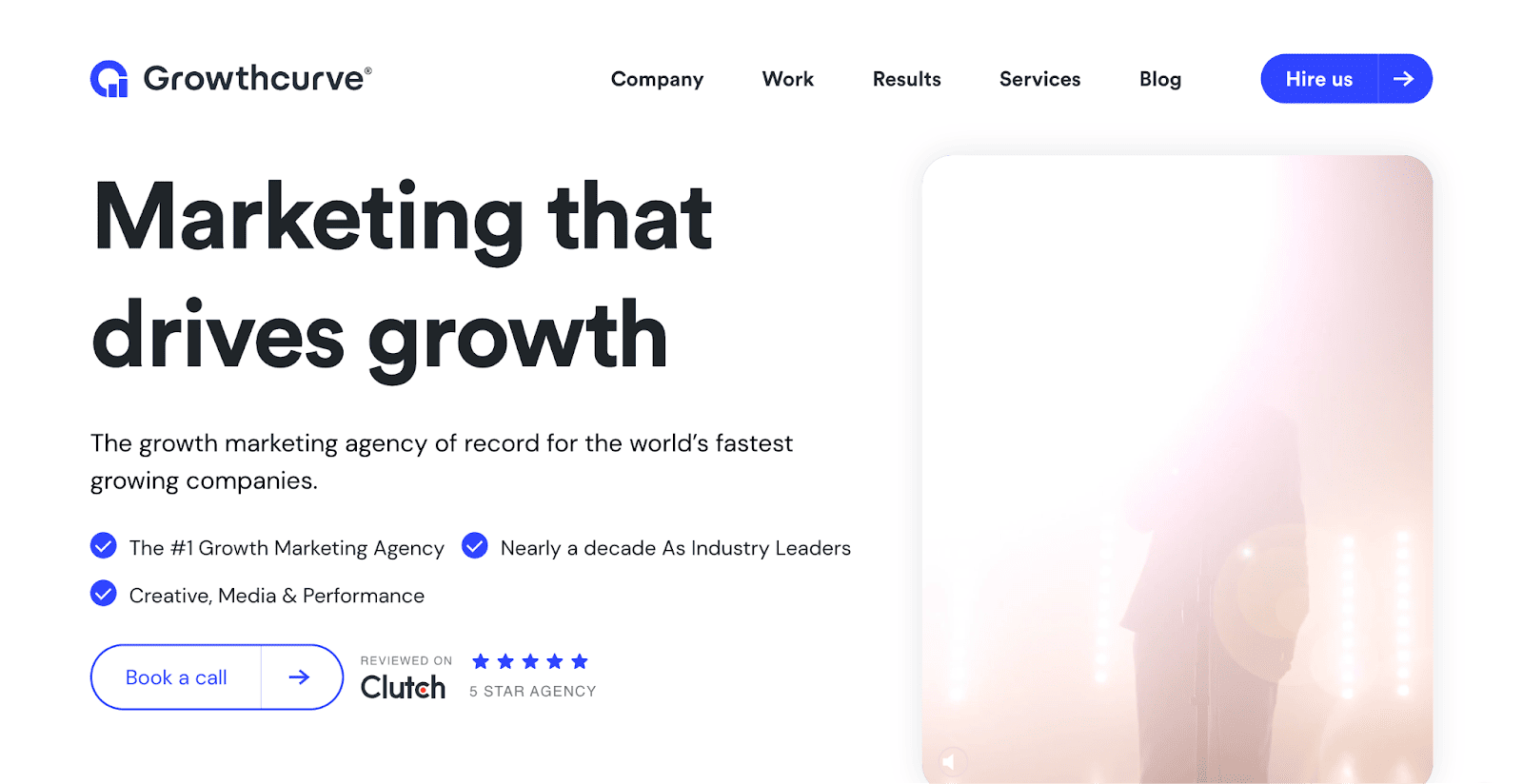
Best for: Startups and scale-ups that want both strategy and creative under one roof
What makes them stand out: Growthcurve offers on-demand growth marketing teams that blend strategy with execution. Perfect for teams who want to skip the agency bloat and just get results fast.
What they offer: Paid social, performance creative, email campaigns, funnel optimization
Credibility: Flexible model with past work across fintech, ecommerce, and tech
Choosing between a demand generation agency and an in-house team depends on speed, control, budget, and how mature your marketing function already is.
There is no perfect answer. The right choice depends on what you need right now.
Building in-house makes sense when demand generation is becoming a long-term core function inside your company.
You get more control over messaging, strategy, sales alignment, reporting, and day-to-day execution. Your team also gets closer to the product, customers, and internal priorities.
This is usually the better route if you already have:
The downside is speed. Hiring a full demand generation team takes time, and one person rarely has all the skills needed. You may need strategy, copywriting, design, paid media, email, CRM, lifecycle, analytics, and sales enablement support.
Hiring an agency makes more sense when you need to move faster or you do not have the internal team to build the engine yourself.
A good agency already has the people, tools, workflows, and campaign experience in place. That helps you launch faster, test more ideas, and avoid some of the early mistakes that happen when a team is figuring everything out from scratch.
This route usually works best if:
In-house gives you more control. An agency gives you more speed.
In our experience, many B2B companies do both over time. They start with an agency to build momentum, learn what works, and create repeatable systems. Then, once the motion is proven, they decide whether to keep the agency, build internally, or use a hybrid model.
The worst option is hiring in-house without a clear strategy or hiring an agency with no internal owner. Demand generation needs ownership either way.
Hiring the wrong demand generation agency is usually not just an agency problem. It often happens because the company chooses a partner before getting clear on what it needs.
If your ideal customer profile is vague, the agency will have to guess. That usually leads to weak targeting, generic messaging, and low-quality leads.
Before hiring an agency, you should know who you want to reach, what problem they care about, what triggers buying intent, and what makes them a good fit for your sales team.
A high lead count can look good in a report, but it does not mean the campaign is working.
The real question is whether those leads turn into qualified conversations, opportunities, and revenue. If an agency cannot explain how it improves pipeline quality, not just lead volume, be careful.
Paid ads, SEO, outbound, email, LinkedIn, and content can all work, but no single channel fixes a weak offer or unclear positioning.
Good demand generation usually requires a connected system, not random channel execution.
Demand generation does not end when someone fills out a form, replies to an email, or books a meeting.
If sales follow-up is slow, generic, or disconnected from the campaign message, good opportunities can disappear. The best agency partnerships include feedback between marketing, sales, and campaign execution.
Before the campaign starts, agree on what success means.
That could include booked meetings, SQLs, pipeline created, CAC, opportunity quality, sales cycle length, or closed revenue. Without clear metrics, both sides end up judging performance differently.
Demand generation is changing fast. Buyers are harder to reach, harder to convince, and more informed before they ever speak to sales.
The best demand generation agencies in 2026 are not just running more campaigns. They are helping companies adapt to how B2B buyers actually research, compare, and choose vendors today.
B2B buyers are more skeptical of vague claims, generic thought leadership, and surface-level content.
That means demand generation needs stronger proof earlier in the journey. Case studies, customer stories, comparison pages, ROI examples, sales call insights, and third-party reviews now matter more than polished messaging alone.
A good agency should help you show why buyers should trust you before they ever book a call.
AI is changing the way buyers discover and compare companies. Buyers are using AI tools, search summaries, review platforms, communities, and internal research workflows before they ever land on your website.
For demand generation, this means your content, positioning, case studies, and online reputation need to be easy to understand, easy to verify, and consistent across channels.
The companies that win will not just create more content. They will create clearer proof that both humans and AI-powered research tools can understand.
More teams are realizing that MQL volume alone does not prove marketing is working.
In 2026, demand generation performance should be judged by pipeline quality, sales-qualified opportunities, conversion rates, CAC, sales cycle length, and revenue influenced.
This shift matters because it forces agencies to focus less on activity and more on business outcomes.
A single channel is rarely enough anymore.
Paid ads can create awareness. SEO can capture research demand. Outbound can reach specific accounts. Email can nurture interest. Retargeting can stay in front of buyers. Sales can convert the demand into pipeline.
The best agencies know how to connect these channels instead of running them as separate tactics.
The best insights often come after the campaign launches.
Email replies, call recordings, objections, demo notes, lost deal reasons, and CRM data can all improve demand generation. Agencies that use this feedback can sharpen messaging, improve targeting, and help sales teams handle objections better.
In our experience, this feedback loop is one of the biggest differences between campaigns that improve over time and campaigns that slowly lose momentum.
A demand generation agency helps B2B companies create awareness, trust, and buying intent with the right audience. The goal is not just to collect leads, but to turn market interest into qualified pipeline.
A lead generation agency usually focuses on capturing contacts or booking meetings. A demand generation agency works across more of the buyer journey, including awareness, education, nurturing, intent capture, and sales alignment.
You may need one if your team has a strong offer but not enough qualified pipeline, your marketing feels scattered, your sales team is chasing weak leads, or you do not have the internal team to run campaigns consistently.
Ask how they define a qualified lead, what channels they are strongest in, what case studies they can show, how they report on pipeline, how they use sales feedback, and what happens if the first campaign does not work.
Outbound and paid campaigns can show early signals within weeks. SEO, content, brand demand, and lifecycle campaigns usually take longer. The timeline depends on your sales cycle, market, offer, and how much demand already exists.
The most important metrics are qualified conversations, booked meetings, SQLs, opportunities created, cost per qualified opportunity, CAC, pipeline influenced, sales cycle length, and closed revenue. Clicks, impressions, and open rates are useful diagnostics, but they are not enough.
Costs vary based on scope, channels, market, and execution depth. A narrow campaign will cost less than a full program that includes strategy, paid media, outbound, content, lifecycle, CRM, and reporting. Judge cost against pipeline quality and internal time saved, not just the monthly retainer.
Hire an agency if you need speed, outside expertise, or execution without hiring a full team. Build in-house if demand generation is becoming a long-term core function and you have the budget, leadership, and time to manage it properly.
The best agency depends on your stage, ACV, sales cycle, and main growth bottleneck. Early-stage SaaS companies may need positioning, outbound, and fast pipeline creation. Mid-market or enterprise SaaS companies may need paid media, content, lifecycle, attribution, and sales enablement.
SalesCaptain is a strong fit for SaaS companies that want a full-funnel outbound system focused on qualified pipeline, not just lead volume. Its model works especially well when a SaaS team needs to create demand from cold accounts, capture demand from accounts showing buying signals, and recover demand from warm prospects who previously engaged but did not convert.
If your goal is pipeline quality, look for an agency that understands SaaS buying committees, demo flows, product maturity, sales cycles, and the difference between creating demand and simply collecting leads.
Some demand generation agencies are strongest in content, SEO, paid content promotion, LinkedIn content, landing pages, and nurture assets. These partners are usually a good fit when your main problem is educating the market, improving content performance, or turning existing traffic into pipeline.
If your biggest issue is net-new pipeline or outbound execution, a content-first agency may not be enough on its own. In that case, look for a partner that can connect content with outbound, retargeting, email, and sales follow-up.
To choose a demand generation agency for enterprise, focus on industry fit, sales cycle experience, buying committee complexity, reporting depth, and ability to work with your existing CRM and sales process.
Enterprise demand generation usually needs more than campaign execution. The agency should understand account-based marketing, multi-stakeholder buying journeys, longer sales cycles, compliance requirements, and how to measure pipeline quality across several touchpoints.
To find trusted B2B demand generation consultants, look for clear case studies, relevant industry experience, public client reviews, practical frameworks, and proof that they can improve pipeline quality, not just lead volume.
If you only need a strategy, a consultant may be enough. If you need strategy, execution, reporting, and campaign management, a demand generation agency is usually the better fit.
You can find B2B demand generation agency reviews on platforms like Clutch, G2, Google, agency case study pages, LinkedIn, and customer testimonial pages.
Do not rely only on star ratings. Look for reviews that mention pipeline quality, communication, reporting, lead quality, sales alignment, and whether the agency actually helped create qualified opportunities.
Look for a demand generation agency that can support both demand creation and demand capture.
Demand creation means reaching the right accounts before they are actively looking. Demand capture means converting buyers who are already showing intent through search, paid ads, outbound, retargeting, email, or website engagement.
The best partner is one that can help you identify the right accounts, localize messaging, test offers, and adjust campaigns based on regional buyer behavior.
Expanding into a new market is not just about getting more contacts. You need to understand who is worth targeting, what pain points matter, and what message will earn trust in that market.
SalesCaptain can be a strong fit here because its campaigns can be localized by region, buyer context, and buying stage.


.svg)


.svg)

.svg)


.svg)


